

Joe Gore is that rare thing, a relentlessly creative and successful guitarist (including credits on seminal Tom Waits and PJ Harvey
 recordings, as well as work with Courtney Love
 , DJ Shadow
 , Aimee Mann, Tracy Chapman
 , Kimya Dawson
 of the
Moldy Peaches, the Eels
of the
Moldy Peaches, the Eels , Les Claypool
 and John Cale
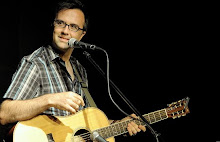
 ) who also excels at a number of other pursuits. These include journalism - he was the senior editor of Guitar Player magazine for several years in the late 1980s and early 1990s - and large scale creative projects, like the gargantuan Clubbo website, a fictional record company with a deep back catalogue, all fake. I've admired Joe Gore's guitar playing and writing for many years, and am grateful that he agreed to answer a few of my questions via email.
and PJ Harvey recordings, as well as work with Courtney Love, DJ Shadow, Aimee Mann, Tracy Chapman, Kimya Dawson of the
Moldy Peaches, the Eels, Les Claypool and John Cale) who also excels at a number of other pursuits. These include journalism - he was the senior editor of Guitar Player magazine for several years in the late 1980s and early 1990s - and large scale creative projects, like the gargantuan Clubbo website, a fictional record company with a deep back catalogue, all fake. I've admired Joe Gore's guitar playing and writing for many years, and am grateful that he agreed to answer a few of my questions via email.
You
have a new project coming out this week - can you tell us something about this?
Mental
99 is a new band with my pal, drummer Dawn Richardson. We'd
been wanting to do something together for years, and we finally got
around to it. It's an instrumental duo, exploring the question of how
much racket two players can create.
There are a
couple of things that I find exciting about the project, beyond the
pleasure of playing with such a cool and creative drummer.
1. Phantom bass syndrome. For various reasons, many of the
projects I've been involved with for the last decade have had no bass
player, and I've gotten increasingly into the idea of playing the bass
and guitar roles simultaneously. Not necessarily in the Ted
Greene /Charlie Hunter
 sense of true multi-voice counterpoint, so much as
creating parts that straddle those two roles. I've played bari-guitars,
or just low-tuned regular guitars, for ages, especially on the records I
did with Tom Waits and PJ Harvey. Along the way, I just started hearing
less in terms of bass vs. guitar, and more in terms of low/dark vs.
high/bright. (Having said that, Dawn and I got to play a show recently
in a quartet with Tracy Chapman and Flea, and it was exhilarating to
play with a bassist again, especially one that talented!)
sense of true multi-voice counterpoint, so much as
creating parts that straddle those two roles. I've played bari-guitars,
or just low-tuned regular guitars, for ages, especially on the records I
did with Tom Waits and PJ Harvey. Along the way, I just started hearing
less in terms of bass vs. guitar, and more in terms of low/dark vs.
high/bright. (Having said that, Dawn and I got to play a show recently
in a quartet with Tracy Chapman and Flea, and it was exhilarating to
play with a bassist again, especially one that talented!)
/Charlie Hunter sense of true multi-voice counterpoint, so much as
creating parts that straddle those two roles. I've played bari-guitars,
or just low-tuned regular guitars, for ages, especially on the records I
did with Tom Waits and PJ Harvey. Along the way, I just started hearing
less in terms of bass vs. guitar, and more in terms of low/dark vs.
high/bright. (Having said that, Dawn and I got to play a show recently
in a quartet with Tracy Chapman and Flea, and it was exhilarating to
play with a bassist again, especially one that talented!)
2. Pure sound fixation. For the last few years I've been
geeking out on guitar sound — pure sound — to an unhealthy degree. I've
done consulting/development work for various audio companies, some of
which involved scrutinizing classic guitar tones. To better understand
how those things work in the digital realm, I started building analog
stompboxes and amps, and that became a parallel obsession. But it got to
the point where I felt like a painter who had learned to mix amazing
pigments, but never got around to painting anything. So one motivation
for Mental 99 was to actually use some of the tools I'd worked
on.
3. Those who can't sing, don't. Playing
instrumental music has always been a can of worms for me. I was a
classical musician till my early 20s, and I still love classical music,
though I don't play it. And while I dig jazz and have played it with
some amazing artists, I've never really been a jazz musician. Plus, the
jazz I'm drawn to tends to be highly arranged/composed stuff — I've
always responded more to Ellington than to bop. (And I sincerely hate
Real Book blowing sessions with round-robin soloing.) On the other hand,
I love lots of kitschy instrumental music, like surf, easy listening,
and Euro-cheese soundtracks. But my ear is too dissonant to play that
stuff in a literal way. So I guess Mental 99 sounds at times like the
Ventures playing Ellington, or Gang of Four playing the Ventures.
Basically, people attempting music they have no business playing,
sometimes with cool results.
Anyway, I play everything on one
guitar, a standard-scale James Trussart tele tuned down to CGCFAD (like
regular dropped-D, transposed down a whole-step), into a laptop running
Apple's MainStage. There are no amps or stompboxes, though the signal
runs through a hardware looper before it reaches the mixing board/PA.
I've done a zillion digital guitar recordings, but this is the first
time I've been dumb enough to try it live.
Here's a free song if
anyone's curious. It was cut live in the studio with no overdubs — just
drums and guitar/laptop going straight to disc. Though we did actually
play a few minutes longer and edit out the boring bits. (Hey — Miles did
it too!)
Could you talk about the
Clubbo project from a guitar perspective? Specifically, how do you approach the faking
of outdated guitar sounds?
Well, Clubbo was an over-ambitious project I co-created
with Elise Malmberg, a great singer, composer, engineer, and audio geek.
It alleges to be a web site documenting the half-century history of
Clubbo records, complete with music, album art, biographical essays, and
various "historical" debris. It's all fake, of course. (BTW, here's
the secret
page with the real credits.) The site is hundreds of pages
deep — even many of the "external" links are faked, leading to other
bogus websites we made.
Guitar-wise, it was fun, because it was an excuse
to play everything I never would have been caught dead doing under my
own name. Southern rock? Shred metal? Jam band noodling? No prob!
As for the recording techniques, 90% of it created in software —
mimicking various historic recording chains via digital distortion, EQ,
compression, and effects. One secret trick: heavy use of
impulse-response reverbs made from quirky/crappy old gear.
You recorded seven albums
with Tom Waits, a musician with a singular aesthetic - did he give you any
directives about what he wanted from you?
The
direction is continuous — he directs every part, sculpting your
performance with his facial expressions, body language, and amazing
turns of phrase. ("Make it sound more poor." "Not bluegrass banjo — death
banjo!"). He never suggests particular notes or parts, but
directs the proceedings so completely that it always comes out sounding
like Tom Waits music. Example: I was thrilled to bits to track a couple
of Tom's song with Stewart Copeland on drums. Tom had Stewart play one
of his fucked-up old circus drums, and coached him on the performances.
In the end, Stewart sounded pretty much like the drummer on any post-Swordfish
Waits album — which is to say, fucking amazing! Almost all Waits
recordings are first or second takes. He hates when it starts sounding
too rehearsed, or like you've worked out the perfect part. Better to
sound like you've never played it before, mistakes and all. And not
using a tuner is a definite plus.
I've heard some of your looping with the Apple
MainStage software - what are the advantages to working with software, rather than a standalone device like
the JamMan or the Boss looper?
I did some work for Logic , GarageBand and
MainStage. (For those who don't use the software, I'll explain: Logic is
Apple's pro recording software, sort of competing cousin to Pro Tools
and Live. GarageBand is a light version of Logic, based on the same
audio engine, that comes installed on most Macs, though sometimes
GarageBand innovations trickle upstream into Logic. And MainStage is a
Logic spinoff optimized for live performance.)
, GarageBand and
MainStage. (For those who don't use the software, I'll explain: Logic is
Apple's pro recording software, sort of competing cousin to Pro Tools
and Live. GarageBand is a light version of Logic, based on the same
audio engine, that comes installed on most Macs, though sometimes
GarageBand innovations trickle upstream into Logic. And MainStage is a
Logic spinoff optimized for live performance.)
, GarageBand and
MainStage. (For those who don't use the software, I'll explain: Logic is
Apple's pro recording software, sort of competing cousin to Pro Tools
and Live. GarageBand is a light version of Logic, based on the same
audio engine, that comes installed on most Macs, though sometimes
GarageBand innovations trickle upstream into Logic. And MainStage is a
Logic spinoff optimized for live performance.)
The latest
version of MainStage includes a powerful looping tool, but I haven't
worked it into live performance yet — I use a hardware Boomerang III looper instead. The all-software looper is more powerful and open-ended,
but I find it difficult to drive onstage, in large part because no one
has made an ideal hardware controller for it. (Apogee's GIO is a
great-sounding I/O that performs fantastically onstage, but it doesn't
have enough footswitches to operate several loops simultaneously AND
switch programs.) I prefer the Boomerang to all other options because of
its great ergonomics — creator Mike Nelson put a lot of thought into
creating a device you can truly pilot in real time. I also use a Kenton Killamix — basically, just a row of controller knobs and switches.
Summary: I loop with the Boomerang, switch programs and toggle effects
with the GIO, and tweak virtual knobs with the Killamix. It's all very
awkward, and it's taken me six months to obtain the vaguest hope of
making it through a song without screwing up.
looper instead. The all-software looper is more powerful and open-ended,
but I find it difficult to drive onstage, in large part because no one
has made an ideal hardware controller for it. (Apogee's GIO is a
great-sounding I/O that performs fantastically onstage, but it doesn't
have enough footswitches to operate several loops simultaneously AND
switch programs.) I prefer the Boomerang to all other options because of
its great ergonomics — creator Mike Nelson put a lot of thought into
creating a device you can truly pilot in real time. I also use a Kenton Killamix — basically, just a row of controller knobs and switches.
Summary: I loop with the Boomerang, switch programs and toggle effects
with the GIO, and tweak virtual knobs with the Killamix. It's all very
awkward, and it's taken me six months to obtain the vaguest hope of
making it through a song without screwing up.
looper instead. The all-software looper is more powerful and open-ended,
but I find it difficult to drive onstage, in large part because no one
has made an ideal hardware controller for it. (Apogee's GIO is a
great-sounding I/O that performs fantastically onstage, but it doesn't
have enough footswitches to operate several loops simultaneously AND
switch programs.) I prefer the Boomerang to all other options because of
its great ergonomics — creator Mike Nelson put a lot of thought into
creating a device you can truly pilot in real time. I also use a Kenton Killamix — basically, just a row of controller knobs and switches.
Summary: I loop with the Boomerang, switch programs and toggle effects
with the GIO, and tweak virtual knobs with the Killamix. It's all very
awkward, and it's taken me six months to obtain the vaguest hope of
making it through a song without screwing up.
I find it a bit ironic that I'm even talking about looping. Like
many musicians I know, I've moved away from looping over the course of
the last decade. Today's zeitgeist just seems to be more about
imperfect, realtime playing. It's been years since I used a drum loop on
anything (except maybe Clubbo tracks making fun of bad drum loop
music).
Still, I find that looping presents huge
challenges — both hugely exciting and hugely daunting. The biggest
problem is that looping tends to lock you in a specific musical
structure: Play a part. Add counterpoint. Get thicker and thicker, then
go silent or fade out. You can compile stunning textures, but the
process gets tiresome. It's harder to make stop-on-a-dime changes,
alternate between contrasting sections, introduce variations, or deviate
from the itinerary on the fly. Those are the things I work on these
days. I haven't mastered any of them, but I'm slowly improving. Or so I
tell myself.
Your tenure at Guitar
Player magazine, from the late 80s to the mid 90s, represents some of the most interesting guitar journalism of the magazine's long history. Yet you told Steven
Ward in 2008: “In retrospect, I was probably a bad fit for the gig. I hated the
music industry. I
hated guitar heroism. I hated guitar collectors. My passions were music and
culture, where guitar occasionally plays a role. I love making music on guitars, but I
have no sentiment about them. They’re hammers and nails to me." Are you proud of your
work there? For
you, what is missing from mainstream guitar journalism?
Well, I stand by those words. But at the same time,
I loved working at the magazine and always felt extremely lucky to have
been part of it. It was amazing to get paid to do so much stuff I
probably would have done for free. I don't reread my work unless I have
to, but I suspect that if I did, I'd be of two minds: I'd wince at how
self-important I sounded, but I'd probably give myself a bit of credit
for documenting some great music while it was being made.
What do I dislike about mainstream guitar journalism? The same
thing every guitarist hates about it: It's doesn't always reflect my
personal taste! But I feel the editors at the top mags are doing a
stellar job in the face of the dual declines of the music industry and
the print medium. Theirs is not an easy gig!
If I did
anything valuable, it was being a conduit: exposing readers to something
great they might not otherwise have encountered, be it a new player, a
forgotten one, a great stompbox, or a cool tuning trick. Fortunately,
players can now obtain all those things more easily than ever online.
It's a trade-off — the "experts" usually can't make a living writing for
consumer music mags these days, so we must rely on the amateur
fanatics. The things we encounter online might not be especially well
written or edited, but they're passionate and intense—and often
shockingly good.
Here's a personal example from when I started
building stompboxes a couple of years ago. I didn't know electronics,
yet I fancied myself an expert. I'd reviewed hundreds of pedals. I had
access to amazing collections of museum-quality gear. I knew the
big-name manufacturers and got paid to scrutinize their latest
creations. I owned a formidable collection myself, and had used them in great
studios with great artists, engineers, and producers. So I ventured
into the DIY community with the most condescending of attitudes. I
thought it would be, "I built me my very own Tube Screamer, and it's
durn-near good as a store-bought one!"
Needless to say, I
was a fucking idiot.
I learned far more about stompboxes from the
collective wisdom of the DIY community that I would have learned in 50
years at a guitar magazine. That's no swipe at the magazines — it's just
that old-school print can't rival the depth of such a large and vibrant
virtual community as the one at, say, freestompboxes.org.
And I can't believe some of the amazing labor-of-love websites, like beavis
audio and gaussmarkov! They're packed with great info,
beautifully presented. So while it's bad time to make a living
dispensing that information, it's a great time to consume it!
My thanks to Joe Gore for taking the time to answer my questions.


 again. This amp, that I got in trade for my Blues Junior a few years ago, has been an up and down affair for me. On one hand, it's a great-sounding little amp, with a warm and organic overdrive that's hard to find on modern amps. On the other, it has given me quite a few problems, like excessive hum and hiss, a disintegrating input jack and melting tube sockets. These problems are well-documented on
 /
/ band (featuring the two principals from the legendary Canadian rock band the
  ) since 2005, and has played with Cummings since 1996. He has performed all over Canada and the United States, and earlier this year travelled to the Canadian Forces base in Kandahar, Afghanistan to perform with his band the
  . He kindly agreed to answer a few questions via email.
 to
to  so I have to have gear
that allows me to dial in a wide variety of tones. With Burton, I have
to try to replicate the tones of some pretty iconic records. Burton is
quite insistent on trying to reproduce those sounds faithfully.
Primarily, I use my
so I have to have gear
that allows me to dial in a wide variety of tones. With Burton, I have
to try to replicate the tones of some pretty iconic records. Burton is
quite insistent on trying to reproduce those sounds faithfully.
Primarily, I use my  100 watt three channel head and a
 cabinet. Some guys gasp at the prospect of somebody still
using high powered heads but I like the clean headroom I can get from
it. It will give super clean sparkly Fender tones as well as that dry
Marshall bark.
cabinet. Some guys gasp at the prospect of somebody still
using high powered heads but I like the clean headroom I can get from
it. It will give super clean sparkly Fender tones as well as that dry
Marshall bark. -12 string with me because we
like to do a lot of British invasion stuff. It is strung with Pyramid
Gold flatwounds like Harrison, McGuinn, and Townsend used on their
Rickenbacker 12 strings.
-12 string with me because we
like to do a lot of British invasion stuff. It is strung with Pyramid
Gold flatwounds like Harrison, McGuinn, and Townsend used on their
Rickenbacker 12 strings. 

 volume pedal, a
  , a
, a  , a
, a  , a
, a  overdrive, a
 analog delay, and a
  tremolo
and is powered by a
tremolo
and is powered by a  isolated power supply.
 or my
or my  into a Peterson Strobostomp
II,
into a Peterson Strobostomp
II,  , and a
  Direct Box.
 cables.
  shows and our friend, Sam, said
“Come and see this band with me – you’ll love them.” We invited Burton
up with us to do some of his favourite cover tunes and 5 hours later, we
were friends. Burton got an offer to do a show but the promoter
requested that he have a full band with him. Burton remembered our jam
that night and called us to ask if we’d like to do a gig or two with
him. Of course, we jumped at the chance. That was 12 years ago. We’ve
been his band ever since.
shows and our friend, Sam, said
“Come and see this band with me – you’ll love them.” We invited Burton
up with us to do some of his favourite cover tunes and 5 hours later, we
were friends. Burton got an offer to do a show but the promoter
requested that he have a full band with him. Burton remembered our jam
that night and called us to ask if we’d like to do a gig or two with
him. Of course, we jumped at the chance. That was 12 years ago. We’ve
been his band ever since. " and "
 " with Randy and
Burton on a big stage in front of tens of thousands of people, I had an
out-of-body experience!
" with Randy and
Burton on a big stage in front of tens of thousands of people, I had an
out-of-body experience!
 with Randy and Burton

 and
and  models have not had a renaissance as of yet.



 Posts
Posts


